
 Image 1 of 1
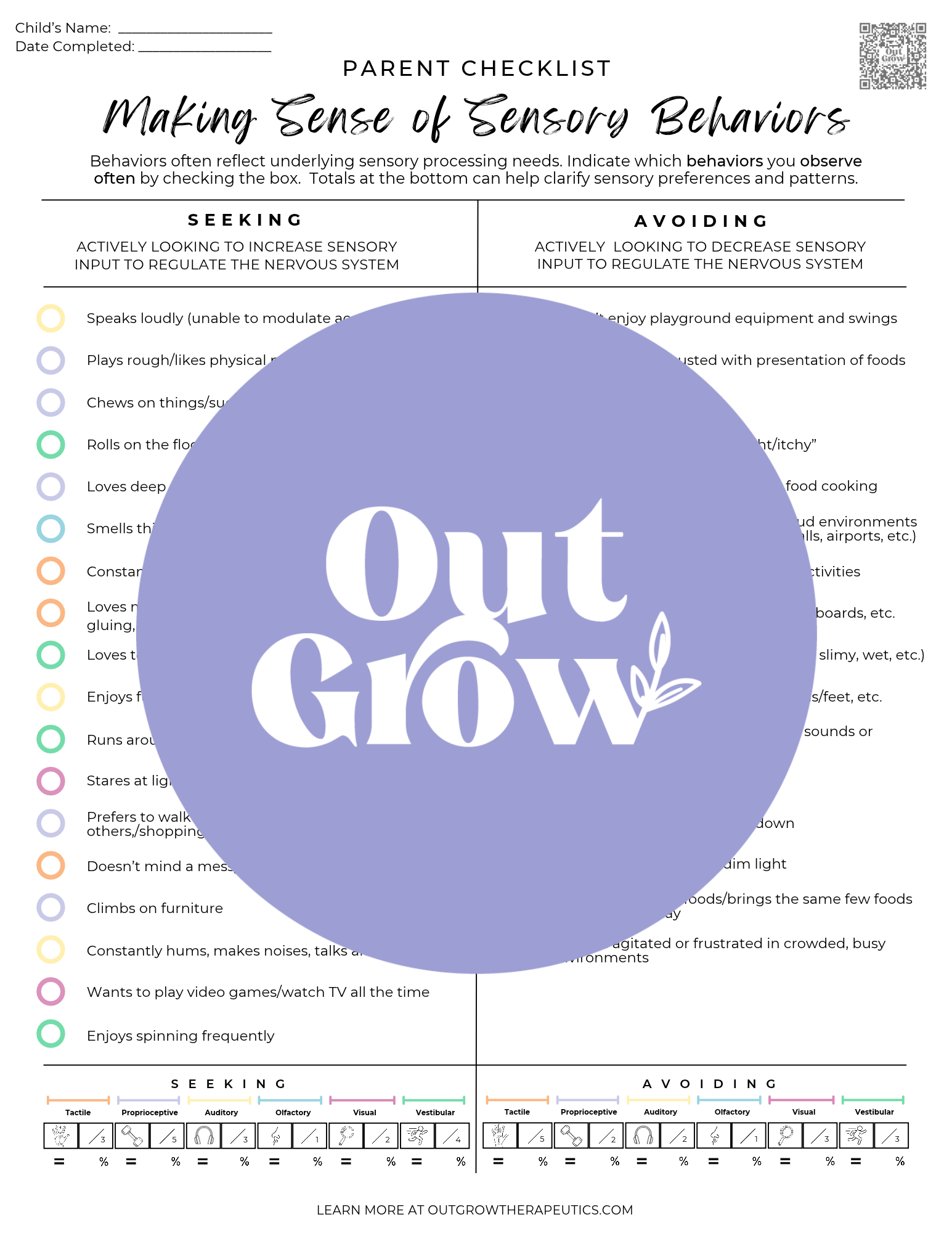
Wondering if your child’s behaviors could be connected to sensory processing? This clinician-created sensory behaviors checklist helps parents, caregivers, teachers, and therapists identify common signs of sensory seeking and sensory avoiding in children. Check off everyday behaviors, like chewing, crashing, spinning, covering ears, avoiding messy play, reacting to clothing, or struggling in loud environments, and look for patterns across the tactile, proprioceptive, auditory, olfactory, visual, and vestibular sensory systems.
Use this free pediatric sensory checklist to better understand why certain behaviors may be happening, recognize your child’s individual sensory preferences and needs, and start thinking about the supports that may help them feel more regulated and successful at home, school, and in the community.