Sensory Function in Behavior Analysis: What BCBAs Can Do Next
We BCBAs are masters at finding the function. You’ve run your assessment, reviewed your data, and determined that the behavior serves a sensory function. Great…but now what? Here is the hard truth about BCBAs and sensory integration: We are not trained to truly assess or understand the sensory function.

Too often in our field, "automatic reinforcement" becomes a catch-all category. We identify that it’s happening, but we lack the clinical tools to understand why it’s happening or what specific input the nervous system is craving. We treat the behavior, but we miss the biology.
But sensory doesn’t mean mystery, it just means the reinforcer is happening inside the child’s body instead of coming from the environment. And that’s where our behavior-analytic tools can still apply, we just have to zoom in on what sensory need isn’t being met and how we can meet it in a more functional way.
Below are common examples of how a sensory function shows up in real ABA clinics, and what to do next.
Destruction = “My body is trying to regulate.”
You’ve seen it: ripping materials off walls, dumping bins, throwing objects when overwhelmed. It’s easy to label this as escape or attention. But sometimes it reflects sensory-seeking behavior, particularly a need for proprioceptive input: deep, heavy-work feedback that organizes the body.

Tearing, pushing, throwing - these create force and resistance. For a dysregulated nervous system, that input can be calming.
What to do next:
If destruction serves a sensory function, build that input proactively into the day.
Schedule heavy-work activities before and after triggers:
Pushing weighted bins
Carrying books
Wall push-ups
“Crash and rebuild” play
Throwing balls into targets
These are practical sensory-based interventions that can easily be implemented in ABA settings. You’re not reinforcing destruction, you’re reinforcing regulation. When children get the input their bodies crave, they don’t need to seek it through disruptive behavior.
Take our FREE quiz! Find out what a child’s behavior is telling you in under two minutes.
Stimming = “This helps me stay calm or focused.”
Hand flapping, humming, spinning, pacing: when the function is sensory, stimming is often a regulation strategy. Stimming may reflect:
Excitement
Anxiety
A need to filter input
A need for predictable stimulation
Some children engage in sensory-seeking behavior to gain more input, while others are managing avoidance of a specific sensory input — humming to block noise, rocking to self-soothe, pacing to regulate.
What to do next:
Look for patterns: Does it increase in noisy environments, during transitions, or with stress? Does the child appear calmer afterward?

If it’s safe and not interfering in their learning, leave it alone. This aligns with neurodiversity-affirming ABA, which respects self-regulation strategies.
If it is unsafe or interfering, teach alternatives that meet the same sensory need:
Tactile seekers → fidgets or putty
Auditory seekers or avoiders → music or headphones
Vestibular seekers → movement during tasks, alternative seating
These are sensory regulation strategies, not compliance tools. We’re expanding options so children can stay regulated and engaged.
Ideally, we want to use these supports regularly, not just after dysregulation occurs. Offer them proactively (before transitions or challenging tasks) and reactively (when signs of dysregulation appear, like zoning out, big reactions, or fast movements). In those moments, pause and guide the child toward one of their sensory tools.
Over time, these moments become powerful co-regulation opportunities. The child begins to notice what helps them feel calm and focused, and you’re modeling how to listen to the body’s cues instead of fighting them. Start with observation. Stay curious. Build tools that make sense for this child.

Elopement = “I need movement - or I need out.”
Elopement immediately raises safety concerns. Once safety is addressed, and you’ve ruled out skill deficits, examine the sensory input present during the time of the elopement.
If the function is sensory seeking, it often reflects a need for vestibular input. The child needs movement, speed, or open space.
If the function is sensory avoidance, it often reflects that the environment feels overwhelming, possibly too loud, bright, or unpredictable.
What to do next:
Look for patterns. Does it happen during seated work? Noisy transitions?

If avoidance-based, modify the environment:
Noise-reducing headphones
Visual boundaries
Predictable safe spaces
If seeking-based, incorporate structured movement:
Obstacle courses
Animal walks
Short movement breaks
These proactive sensory-based interventions in ABA reduce escalation by meeting the sensory need early.
Why This Matters
When we misinterpret sensory-driven behavior:
We write reactive plans.
We escalate power struggles.
We suppress regulation strategies.
We feel frustrated and stuck.
Children feel disrespected and unheard
When we understand sensory function clearly:
Plans become proactive.
Collaboration improves.
Sessions feel calmer.
Children participate more fully.
Children and therapists feel more connected to each other
This is where collaboration between BCBAs and OTs becomes essential. OTs bring sensory system expertise. BCBAs bring functional analysis and data-driven teaching methodologies. When BCBAs and sensory integration align, outcomes improve.
The Takeaway
When you write “sensory” (or automatic reinforcement) as the function, don’t stop there. Ask:
What type of input is being sought or avoided?
Is this sensory seeking behavior or sensory avoidance?
What sensory regulation strategies can I build into the day?
How can our ABA clinic support sensory engagement?
Is the child excited to use the supports I offer? If not, what else can I offer to satisfy the same sensory system?
Sensory-driven behaviors aren’t random, they’re nervous-system communication. The use of a sensory support should never be forced, only offered and modeled. If you’ve found the true sensory need, the child will want to use the support.
When we respond to regulation needs instead of suppressing behavior, we move toward truly neurodiversity-affirming ABA.
Ready to Feel Confident Addressing Sensory Function?
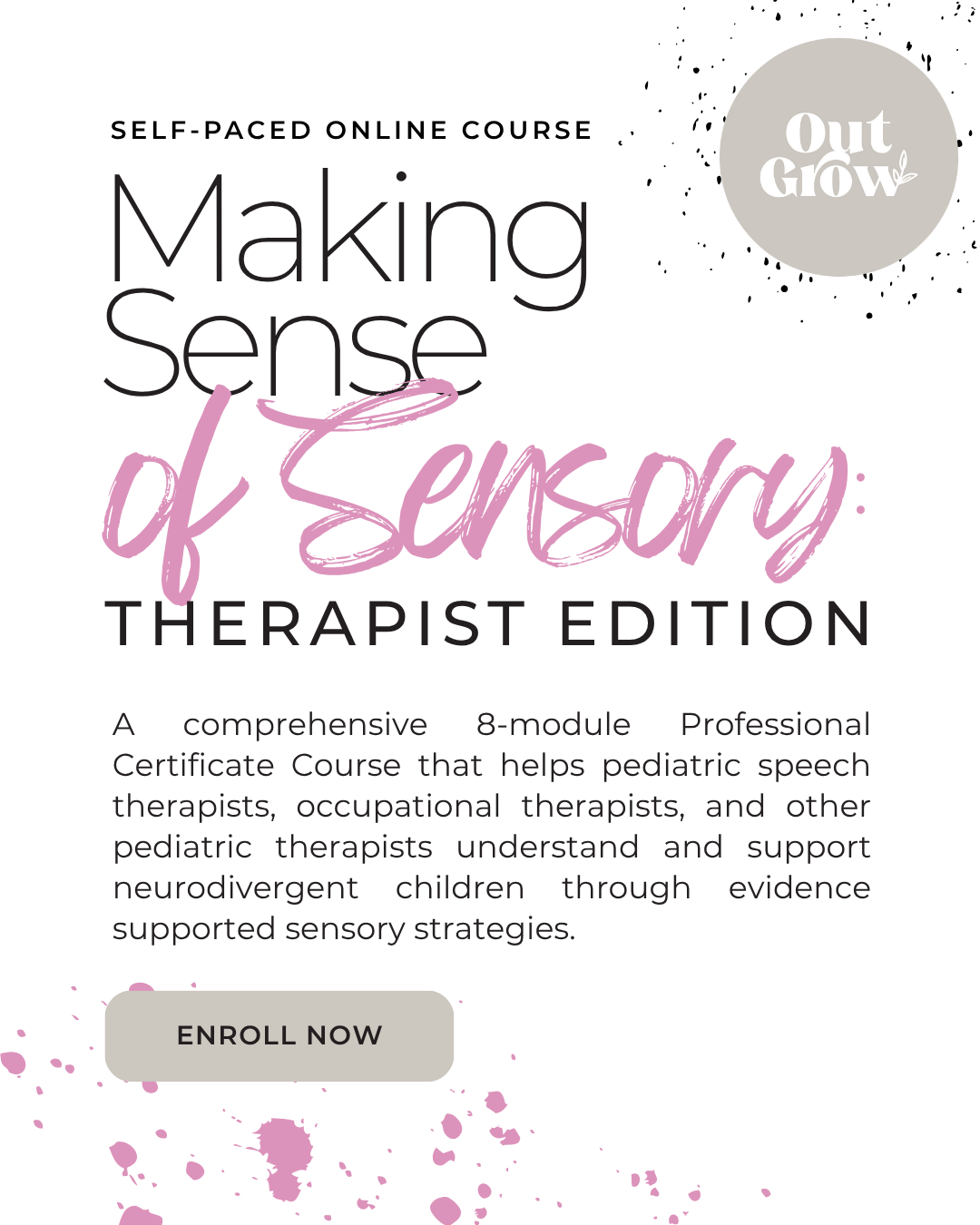
If you’re tired of labeling behavior as sensory without knowing what to do next, this course was built for you.
Making Sense of Sensory: Therapist Edition gives you a clear framework for:
Identifying patterns of sensory processing
Matching supports to the targeted sensory system
Implementing meaningful sensory-based interventions
Strengthening collaboration between BCBAs and OTs
Designing plans that prioritize regulation and participation
No guessing. No vague “automatic reinforcement” labels, but instead practical tools you can use immediately.
Because when you understand the sensory roots of behavior, you stop second-guessing and start building plans that actually work.
Hope to see you inside! Email admin@outgrowtherapeutics.com for questions or group/clinic discounts.
🌿 OutGrow Therapeutics: helping kids (and their therapists) OutGrow What They Know.