Sensory Needs & Big Behaviors: A Simple Sensory Guide for Parents
Help Your Child Respond, Not React.
Big feelings and big behaviors are not random; they are your child’s nervous system trying to communicate. While sensory needs are especially common to be aware of in autistic children, all kids experience unique sensory processing differences.
When we pause to notice what helps a child’s body feel calm and what quickly overloads it, we can switch from reacting in the moment to responding with confidence. Read on for tips on how to support your child’s sensory needs and regulation with at-home tips and sensory tools.
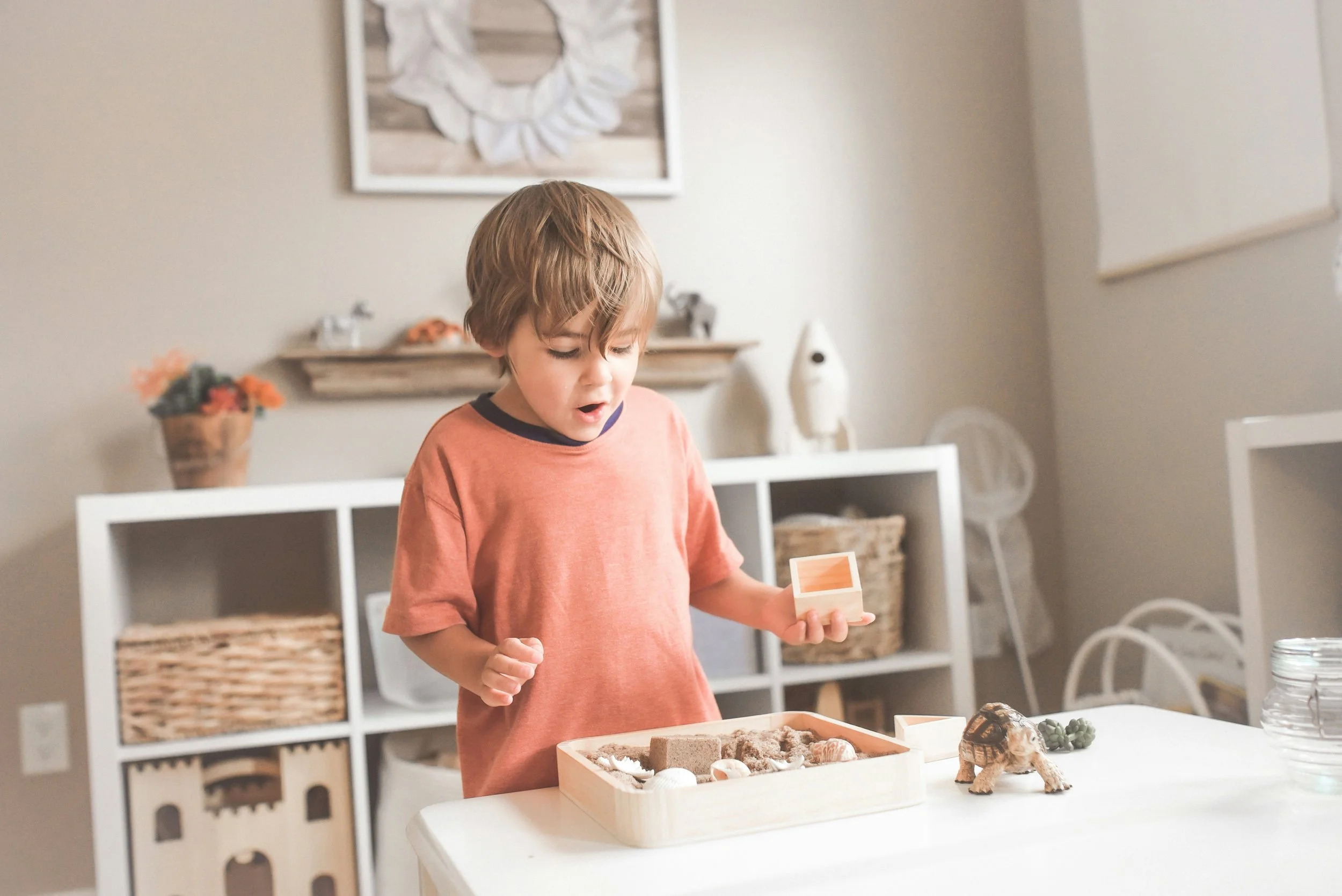
Observe your child in their natural environment.
Before interfering and trying to “change” your child’s behavior, start by observing them, watching their natural play, and getting an idea of their sensory needs. Watching your child’s free play offers valuable insight into their sensory needs, sensory processing, and how their nervous system seeks regulation. What do you see when your child is in charge of the activity and the pace?
→ Lots of spinning, crashing, and moving from place to place?
→ Love of tight hugs, piling under blankets, crawling into small spaces?
→ Hands in ears, humming, tapping, or avoiding certain textures or sounds?
These are signals from your child’s nervous system communicating how it experiences the world. Sensory play is one of the clearest windows into sensory needs, especially for children who experience big behaviors, heightened emotions, or differences in sensory regulation, including many autistic children.
Match what you see to simple sensory buckets.
Once you start observing sensory patterns, the next step is organizing what you see into simple sensory buckets. This shift helps parents move from feeling like “everything sets them off” to understanding what their child’s sensory needs and nervous system are asking for in the moment. Viewing behavior through a sensory regulation lens is especially helpful for children with frequent big behaviors, including many autistic children and kids with sensory processing differences.
→ Jumping, crashing, pushing, or carrying heavy objects: often a need for heavy work, deep body pressure, and input that supports sensory processing and emotional regulation.
→ Avoiding messy play or constantly fidgeting: touch may feel uncomfortable, or the child may need more predictable, safe ways to explore sensory input without overwhelm.
→ Covering ears, seeking quiet, or reacting strongly to noise: sound may be triggering sensory overload, and the child may need more control over their auditory environment to stay regulated.
Knowing which sensory bucket your child falls into helps you choose sensory strategies for kids that actually work. Instead of reacting to big behaviors, you can respond with tools that support sensory regulation for both neurotypical and autistic children.

Build a small sensory toolbox.
A supportive sensory toolbox does not need to be fancy or expensive to support sensory regulation. The most effective sensory tools are repeatable, easy to use, and available wherever your child spends time—at home, in the car, or during daily routines. These strategies are especially helpful for autistic children, though all kids benefit from clear, predictable sensory support.
Stock your toolbox with options that match your child’s sensory needs:
→ Heavy work and body pressure: wall push-ups, carrying laundry or groceries, pushing a full bin across the room, or a weighted blanket to help calm the nervous system.
→ Touch and tactile input: simple sensory bins with rice or beans, a scrub brush in the bath, a small vibrating toothbrush for hands, or a favorite stuffed animal for car rides to support sensory processing.
→ Sound and space: noise-reducing headphones, a quiet corner with a favorite book, soft music for winding down, or a tented space to reduce sensory overload.
Pro tip: Use your sensory toolbox proactively before tricky moments like transitions or homework, or reactively when you notice early signs of dysregulation such as zoning out, fast movements, or big emotional reactions. Offering one familiar sensory tool teaches your child how to listen to their body and choose what supports emotional regulation.
Over time, these patterns become co-regulation. Your child begins to notice, “When my body feels fast, pushing the wall helps,” or “When the room is loud, headphones help me focus.” This awareness is a key step toward independence for many children, including autistic kids.
Want help figuring out your child’s pattern?
Take our quick Sensory Behavior Quiz below to learn what your child’s behavior may be telling you in under two minutes! Prefer a guide who can personalize it for your family? Learn more about our Virtual Parent Coaching to get specific, easy routines that fit your home.
Take our FREE quiz to find out your child’s sensory preferences.
Next Steps:
Take the Sensory Behavior Quiz above.
Book a Virtual Parent Coaching session! Start with our free 20 minute consult to learn more.
Try one toolbox idea today and notice what changes.
Start with observation. Stay curious. Build tools that make sense for your child. You have got this, and we are here to help.
— OutGrow Therapeutics
🌿 OutGrow Therapeutics: helping kids (and their therapists) OutGrow What They Know.